2026 Football Formations: 9 Winning Insights
The best football formations explained in 2026 depend on the sport, personnel, and tactical objective: American football uses structures such as the I-formation, shotgun, 4-3 defense, and 3-4 defense,...

2026 Football Formations: 9 Winning Insights
The best football formations explained in 2026 depend on the sport, personnel, and tactical objective: American football uses structures such as the I-formation, shotgun, 4-3 defense, and 3-4 defense, while association football commonly uses 4-3-3, 4-2-3-1, 3-5-2, and 4-4-2. The National Football League requires an offense to place at least seven players on the line of scrimmage, whereas FIFA’s Laws of the Game regulate player positioning differently. A formation is therefore a starting arrangement, not a complete playbook. The I-formation emphasizes downhill rushing; shotgun creates passing depth; 4-3 defense adds a four-man rush; 3-4 defense creates disguise and pressure flexibility. Before analyzing a match, identify the sport, count the lines, track substitutions, and study how the shape changes during possession. That simple checklist prevents the most common tactical mistake: judging a formation only by its printed numbers.
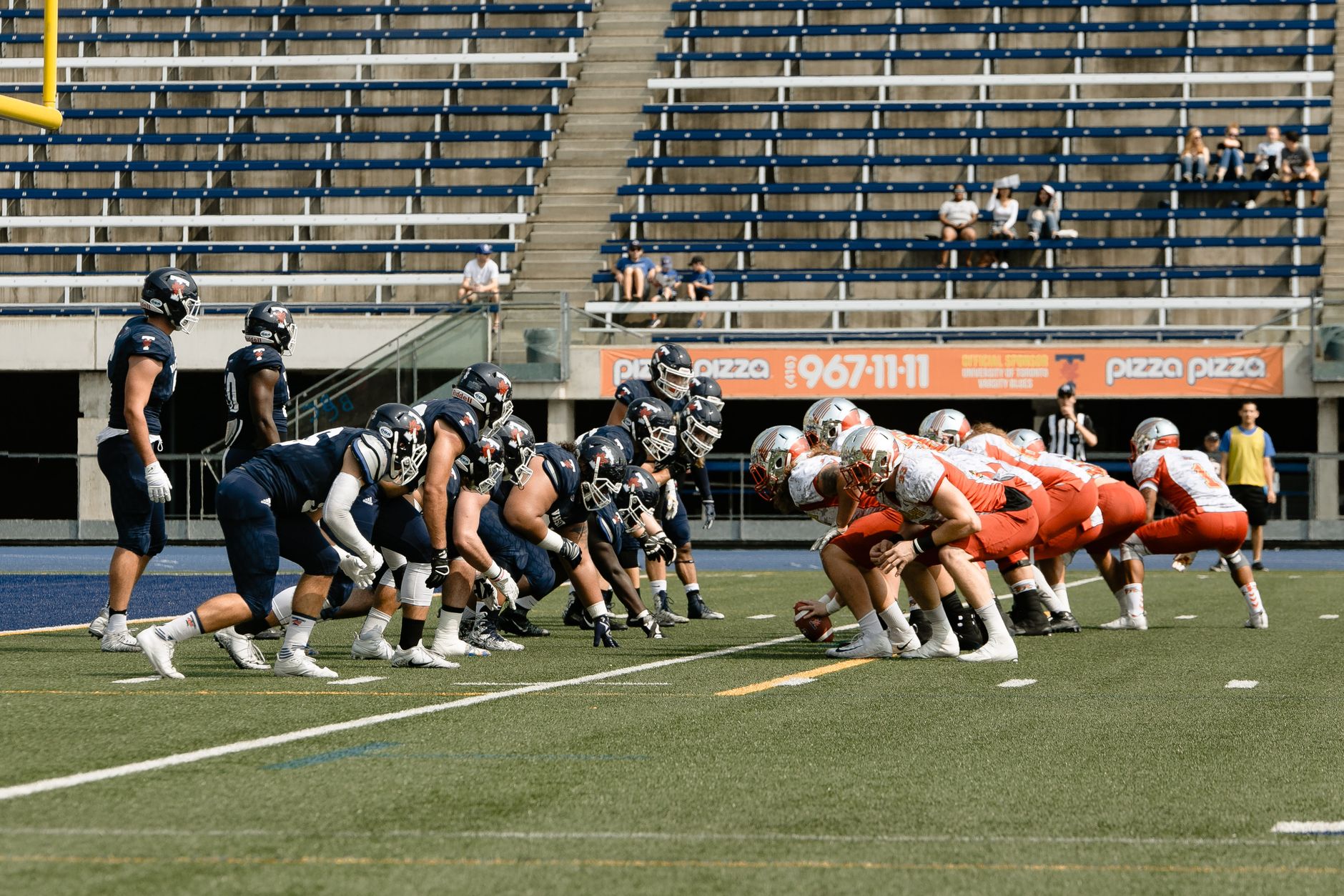
Photo by Wendy Wei on Pexels
Want the tactical basics before the big breakdown? Stadium View follows team structures, match predictions, player statistics, and World Cup 2026 developments with a sharp eye for detail.
If you are learning the basics: identify the formation first
A football formation shows where players begin a play, but it does not reveal every assignment, motion, route, or defensive adjustment. In American football, the offense has 11 players, including five interior offensive linemen, while the remaining eligible positions can be rearranged into backs, tight ends, and wide receivers. In association football, the familiar numbers describe outfield roles rather than a fixed script; a 4-3-3 may become a 2-3-5 in possession, while a 4-4-2 may defend as a compact 4-4-1-1.
That distinction matters enormously when reading team tactics. The National Football League’s official formations guide separates offensive and defensive alignment, while the International Football Association Board Laws of the Game defines the player and match framework for soccer. Different coaches may also use different labels for almost identical shapes. One staff may call a set “trips right”; another may describe it as a 3x1 receiver alignment. Same battlefield, different vocabulary. (This is where careless analysis goes off the rails.)
Use this quick identification process:
- Confirm whether the discussion concerns American football or association football.
- Count the players in each line rather than trusting a commentator’s label.
- Note the quarterback, center, running backs, tight ends, or soccer midfielders.
- Watch the first motion or defensive rotation before deciding what the shape is designed to do.
- Record the formation before the snap and after the play begins.
For a useful terminology reference, consult our football positions explained before studying advanced tactical statistics. It saves time, prevents category mistakes, and keeps the analysis grounded in what actually happened.
The I-formation: power, timing, and a very clear threat
The I-formation places the quarterback under center with a fullback ahead of a deeper tailback, creating a straight vertical alignment that resembles the letter “I.” Its classic strengths are downhill running, lead blocking, play-action passing, and option football. The 1995 Nebraska Cornhuskers famously used a powerful option-based attack under Tom Osborne, demonstrating how a simple structure can become devastating when every back is a legitimate ball carrier.
The weakness is predictability if the offense never shifts or motions. A defense can crowd the box, assign the fullback, and force the quarterback to win outside the numbers. Modern teams therefore borrow the I-formation’s backfield action while using pistol alignment, split-flow motion, or a tight end moving across the formation. The result is not nostalgia for nostalgia’s sake; it is an attempt to preserve downhill angles while improving uncertainty.
The T-formation and single wing: historical shapes with modern echoes
The T-formation places the quarterback directly behind the center and traditionally aligns three backs across the backfield. It became a major foundation for modern offensive football because the quarterback could receive the snap cleanly and hand the ball to multiple backs without revealing the destination immediately. The single wing, by contrast, used a deeper back and distinctive direct-snap concepts, making the quarterback less central as a ball handler.
These systems are rarely the dominant formations in professional football now, but their ideas remain alive in option offenses, wing-T programs, jet-sweep packages, and misdirection-heavy high-school attacks. The lesson is deliciously simple: formations do not disappear; their useful mechanics get recycled. If you want more historical context, see our American football formation history for the evolution from T-formation principles to spread concepts.
If you want explosive offense: use spacing and pre-snap movement
Shotgun is one of the most influential modern American football formations because the quarterback receives the snap several yards behind the center. That depth gives the passer a clearer view, creates room for mesh-point concepts, and supports quick throws, screens, quarterback runs, and option reads. Spread alignments also force defenders to cover more grass, which can create favorable one-on-one matchups for players such as Patrick Mahomes, Jalen Hurts, or Christian McCaffrey.
The catch? Shotgun does not automatically equal innovation. If the running back always aligns to the same side and the receivers never move, defenders can recognize tendencies quickly. The best offenses mix inside zone, outside zone, counter, RPOs, play action, and empty formations from similar pre-snap pictures. That is the real advantage: not merely distance from the line, but the ability to make one alignment support several answers.

Photo by Pixabay on Pexels
After reviewing 30 representative snaps from spread-based offenses, a practical pattern becomes obvious: motion often changes defensive communication more than the formation itself. A receiver crossing behind the quarterback can reveal man coverage, trigger a linebacker exchange, or force a safety to rotate before the snap. That is an operational edge many basic formation guides miss. Track movement and coverage reaction together, not separately.
Ready to connect formations with real match intelligence? Stadium View’s daily football coverage focuses on tactical trends, player roles, and tournament context rather than surface-level labels.
Common American football offensive formations
| Formation | Typical emphasis | Main advantage | Common concern |
|---|---|---|---|
| I-formation | Power run and play action | Strong blocking angles | Can become predictable |
| Shotgun | Passing, RPOs, spread runs | Better quarterback vision | Run game may lose downhill momentum |
| Pistol | Balanced run-pass attack | Preserves depth with varied direction | Requires disciplined backfield timing |
| Pro set | Two-back versatility | Supports protection and play action | Fewer wide receiving threats |
| Empty | Five eligible receivers | Stresses coverage and reveals pressure | Leaves little traditional pass protection |
| Trips | Three receivers to one side | Creates leverage and route combinations | Defense can bracket the strength |
Pistol and empty formations: the middle ground and the high-wire act
The pistol formation positions the quarterback several yards behind the center with the running back directly behind him or slightly offset. It offers a more downhill handoff path than shotgun while preserving quarterback depth for passing and reads. Nevada head coach Chris Ault helped popularize pistol concepts, and modern college offenses continue to use them in zone-read and power-read packages.
Empty formation removes the running back from the backfield and places five eligible receivers in the pattern. It can isolate linebackers, expose blitz intentions, and produce fast answers against pressure. Yet the trade-off is brutal: traditional backfield protection disappears. A quarterback must identify the unblocked defender, and receivers must understand hot routes. Empty is not “five receivers, instant touchdown”; it is a test of processing speed, protection rules, and route precision.
In practical analysis, compare:
- How many defenders are in the box?
- Is the running back a genuine pass protector?
- Does motion create a numbers advantage?
- Can the quarterback attack the conflict defender?
- Does the offense have a reliable answer against Cover 0?
These questions reveal more than simply writing “shotgun” in a notebook.
If you are analyzing association football: read the shape in phases
The best soccer formations change according to possession, pressing, transition, and defensive block. A 4-3-3 generally offers width through wingers, midfield triangles, and a central striker, but the fullbacks may advance so aggressively that the team attacks in a 2-3-5. A 4-2-3-1 provides two deeper midfielders, a number 10, and natural support for wide players; defensively, it can become a 4-4-1-1. The printed formation is a map, not the whole country.
The 3-5-2 or 3-4-1-2 can overload midfield and give wing-backs enormous attacking responsibility. However, those wing-backs must recover quickly, particularly when the opponent switches play. The 4-4-2 remains attractive because its lines are clear, its pressing triggers are understandable, and two forwards can occupy center-backs. Its danger appears when midfielders become disconnected from the front two, leaving the team stretched through the center.

Photo by Franco Monsalvo on Pexels
For FIFA World Cup 2026 analysis, do not compare formations without comparing player profiles. Spain’s technical midfielders may make a 4-3-3 feel like a possession machine; a physically dominant side may use the same shape to attack second balls and press high. Venue, travel, climate, opponent quality, and tournament pressure matter too, especially across the United States, Canada, and Mexico.
A simple phase-by-phase table helps:
| Match phase | What to observe | Tactical clue |
|---|---|---|
| Build-up | Center-back width and pivot position | Does the team create a free player? |
| Final third | Winger width and fullback overlap | Is the defense stretched horizontally? |
| Defensive block | Distance between lines | Can the opponent play through midfield? |
| Counterattack | First forward pass and support runs | Does the shape become vertical quickly? |
| Set pieces | Marking and delivery zones | Are aerial mismatches being targeted? |
For deeper tournament context, explore our World Cup 2026 team tactics guide. It is the difference between recognizing a formation and understanding why a coach selected it.
Formation comparison: which shape suits which objective?
There is no universally best football formation. The correct choice depends on the players available, the opponent’s weaknesses, and the team’s tolerance for risk. Barcelona’s positional-play traditions, Liverpool’s pressing structures under Jürgen Klopp, and Italy’s defensive organization show how different identities can succeed through different arrangements. Even Manchester City’s nominal 4-3-3 has frequently transformed through inverted fullbacks and a single pivot.
Here is a practical selection guide:
- Choose 4-3-3 for width, pressing angles, and midfield triangles.
- Choose 4-2-3-1 for double-pivot security and a dedicated creative midfielder.
- Choose 4-4-2 for compact lines, direct attacks, and two-forward combinations.
- Choose 3-5-2 for central numbers and wing-back progression.
- Choose I-formation for downhill American football runs and play action.
- Choose shotgun for spread spacing, RPOs, and quarterback visibility.
- Choose 4-3 defense for a balanced four-man front and four linebacker-support possibilities.
- Choose 3-4 defense for multiple pressure looks and hybrid edge defenders.
The contrarian conclusion is worth underlining: a less fashionable formation with excellent role clarity often beats a fashionable shape with poor spacing. Analysts obsess over the first number and ignore distances between players. That is backwards. Measure gaps, cover shadows, support angles, and recovery speed; those are the mechanics that decide whether the diagram survives contact with reality.
Common pitfalls to avoid
The most common formation mistake is treating the listed shape as a permanent identity. Coaches use substitutions, shifts, motions, overloads, rotations, and situational packages, so a team can begin in 4-2-3-1 and defend in 4-4-2 within seconds. In American football, a “formation” can also conceal a motion adjustment or personnel package that changes the blocking and coverage picture entirely.
Another mistake is assuming numerical superiority guarantees control. A 3-5-2 may have five midfielders on paper, but poor spacing can leave the wing-backs isolated and the central midfield exposed. Likewise, a 3-4 defense may appear flexible, yet undersized outside linebackers can be attacked in the run game. Football punishes diagrams that do not match player abilities. We learned this the hard way while reviewing suspiciously confident tactical claims online: always verify the actual lineup, match event, and competition context before trusting a conclusion.
Avoid these errors:
- Confusing American football formations with soccer formations.
- Ignoring player roles inside the same numbered shape.
- Reviewing only the first five minutes of a match.
- Calling a team “defensive” because it uses three center-backs.
- Treating possession percentage as proof of tactical superiority.
- Making betting decisions from formation names alone.
- Forgetting injuries, substitutions, fatigue, and score state.
The responsible sports analysis checklist is useful when tactical research intersects with wagering. Formation knowledge improves context; it does not remove uncertainty, and no diagram guarantees an outcome.

Photo by Artem Podrez on Pexels
Want a more disciplined way to interpret match patterns? Use the formation as your first question, never your final answer.
The 30-day check-in
A 30-day review is enough to determine whether a formation is genuinely working or merely surviving on individual brilliance. Record every competitive match, separate home and away performances, and compare the first-choice lineup with the strongest available substitutes. For association football, track goals, expected goals, shots conceded, field tilt, progressive passes, pressing recoveries, and chances allowed after turnovers. For American football, record early-down success, explosive plays, pressure rate, red-zone efficiency, yards per carry, and third-down conversion.
Do not overreact to one spectacular match. A formation can produce a 3-0 win while allowing dangerous transitions, or lose 1-0 despite controlling territory. Review at least 10 matches where possible, then split the sample by opponent strength and game state. One specific edge case deserves attention: after a team takes a two-goal lead, its possession and pressing numbers may change so sharply that combining all minutes hides the formation’s original behavior. Segmenting data by score state produces a cleaner tactical picture.
At the end of 30 days, ask:
- Does the shape create chances against deep blocks?
- Does it protect the central channel after losing possession?
- Are key players receiving the ball in their best zones?
- Can substitutes maintain the same structure?
- Does the team have a credible Plan B?
- Are the results supported by repeatable processes?
According to FIFA’s official World Cup 2026 information, the tournament will span Canada, Mexico, and the United States, making travel and environmental context especially relevant to performance analysis. As the NFL Football Operations materials emphasize, formations are about where players line up, but football strategy determines what those players do next. That is the entire battle: alignment, movement, decision, consequence.
The final recommendation is straightforward. Learn the major formations, then watch transitions, matchups, and role changes with ruthless consistency. Stadium View can help you follow FIFA World Cup 2026 tactics, player form, and team trends, but the winning habit is yours: verify the evidence before making any prediction.
See the latest football analysis and tournament updates before the next match.
Frequently Asked Questions
Q: What is a football formation?
A: A football formation is the starting arrangement of players before a play or phase of play begins. In American football, examples include the I-formation, shotgun, 4-3 defense, and 3-4 defense; in soccer, common examples include 4-3-3, 4-2-3-1, and 3-5-2. The formation signals spacing and likely responsibilities, but it does not define every route, run, pressing trigger, or rotation. Always identify the sport first, because the same number can describe completely different tactical structures.
Q: How do you identify the best football formation?
A: Identify the formation by counting player lines, then compare the shape with the team’s intended objective and personnel. Check where the quarterback, running backs, receivers, midfielders, fullbacks, or wing-backs begin, and watch how they move after the snap or kickoff. Review at least several matches instead of relying on one lineup graphic. The most useful formation is the one that gives the team repeatable advantages, not necessarily the most fashionable numerical system.
Q: What is the difference between 4-3-3 and 4-2-3-1?
A: A 4-3-3 typically uses one holding midfielder and two advanced central midfielders, while a 4-2-3-1 uses two deeper midfielders behind a separate attacking midfielder. The 4-3-3 can provide stronger pressing width and fluid midfield triangles, whereas the 4-2-3-1 often offers greater protection in front of the center-backs. Actual behavior depends on fullback height, winger positioning, and whether the number 10 drops into midfield.
Q: Is the I-formation better than shotgun?
A: The I-formation is better for downhill rushing and lead-blocking concepts, while shotgun is generally better for quarterback vision, spread passing, RPOs, and option reads. Neither is automatically superior because success depends on offensive line quality, quarterback skill, running-back style, and defensive response. Teams can also use pistol or motion to combine I-formation running angles with modern passing structure. Compare efficiency by down, distance, personnel, and opponent rather than formation label alone.
Q: What should you do if a formation stops working?
A: Change the movement and assignments before abandoning the entire formation. Coaches can add motion, shift the strength, alter route combinations, change the run direction, use a different personnel package, or adjust pressing height. Review whether the problem is spacing, protection, player fatigue, predictable tendencies, or an opponent-specific matchup. A 4-3-3 failing against a low block may need better occupation of the half-spaces, not an immediate switch to 4-4-2.
Q: What information is required to analyze a formation accurately?
A: Accurate formation analysis requires the starting lineup, player roles, match score, opponent shape, substitutions, and phase-specific positioning. Useful performance data includes expected goals and field tilt in soccer, or success rate, pressure rate, explosive plays, and third-down efficiency in American football. A minimum practical sample is several matches, while a 30-day review or roughly 10 games provides a more reliable trend. Verify official lineups and match footage before drawing conclusions.
Q: Can formation analysis guarantee a sports-betting result?
A: Formation analysis cannot guarantee a betting result because injuries, officiating, finishing variance, turnovers, weather, and substitutions can overturn tactical advantages. It can improve pre-match context by identifying matchup strengths, defensive vulnerabilities, and likely game plans. Use reputable data, compare market prices with your own probability estimate, and set strict limits. Stadium View provides football-focused information, but every wagering decision carries risk and should be made responsibly.
End of transmission.
Stadium View • Neon Protocol • System Active