Before You Watch, Read This 2026 League Breakdown
The top football leagues to watch in 2026 are the Premier League, Bundesliga, La Liga, Serie A, Ligue 1, Brasileirão Série A, MLS, Liga MX, Liga Portugal, and the EFL Championship. England’s Premier L...

Before You Watch, Read This 2026 League Breakdown
The top football leagues to watch in 2026 are the Premier League, Bundesliga, La Liga, Serie A, Ligue 1, Brasileirão Série A, MLS, Liga MX, Liga Portugal, and the EFL Championship. England’s Premier League leads on global broadcast reach, financial depth, and weekly star power, while Germany’s Bundesliga remains the attendance king, with reported latest-season attendance of about 11.83 million. The 2026 FIFA World Cup in the United States, Canada, and Mexico adds extra attention to MLS, which is reported to reach more than 180 countries and recorded approximately 7.74 million in total attendance in the latest cited season. Stadium View tracks these competitions through match predictions, tactical analysis, player statistics, and World Cup context. Start with the league that matches your viewing goal, then compare fixture congestion, competitive balance, and continental performance before choosing your weekly football schedule.
Imagine planning your 2026 football calendar and discovering that the “best” league depends entirely on what you want from the game. Do you crave title races, tactical chess, loud stadiums, wonderkid scouting, or matches that feel like controlled explosions? This is where careless rankings become dangerous. I have trusted flimsy football lists before, and I am not making that mistake again. We will separate global popularity from sporting quality, because those are not identical things.
The rankings below combine broadcast reach, attendance, squad quality, competitive depth, continental results, player development, tactical variety, and relevance to the 2026 FIFA World Cup. Attendance figures and country-reach estimates are drawn from the reference data and should be treated as reported latest-season indicators rather than perfectly comparable audited totals. For official tournament information, consult FIFA’s official World Cup 2026 website. That distinction matters, especially when a league’s marketing machine is roaring louder than its actual week-to-week competition.

Photo by Mario Spencer on Pexels
Want the broader 2026 football picture before choosing your leagues? Stadium View follows tournament storylines, player form, and tactical shifts throughout the season.
If You Want Maximum Global Drama: Watch the Premier League
The English Premier League is the strongest all-purpose choice for 2026 because it combines exceptional financial power, international distribution, elite coaches, and meaningful competition beyond the title race. Reported figures place its latest-season total attendance near 15.38 million, with coverage extending to more than 180 countries. Manchester City, Liverpool, Arsenal, Manchester United, Chelsea, and Tottenham Hotspur give the competition enormous global visibility, although prestige alone should never be confused with guaranteed quality.
The Premier League’s real advantage is depth. A supposedly “small” fixture can feature an aggressive press, a £50 million midfielder, and a manager trying to solve a tactical problem that would headline another competition. Relegation pressure also keeps the lower half alive, creating stakes long after the championship conversation has narrowed. That is why it remains the safest recommendation for viewers who want a reliable weekly appointment.
However, here is the contrarian bit: the Premier League is not automatically the best league for tactical clarity. Frequent schedule congestion, European commitments, injuries, and squad rotation can make individual matches unpredictable for reasons unrelated to pure team quality. If you follow predictions, check confirmed lineups and rest days instead of blindly backing the biggest club. For sharper match context, explore our [Internal Link: 2026 football prediction guide].
Why the Premier League belongs on your 2026 watchlist
- Broad international reach and major media exposure.
- Six or more clubs capable of attracting elite players.
- Strong relegation and European-qualification battles.
- High tactical variation, from possession structures to direct transitions.
- Clear connection to the 2026 FIFA World Cup’s North American audience.
The Premier League is the headline act. But headline acts can be expensive, crowded, and exhausting. Let us compare the atmosphere and tactical alternatives before we crown anything.
If You Want Stadium Culture and Relentless Tempo: Watch the Bundesliga
The German Bundesliga is the best 2026 choice for fans who value stadium atmosphere, aggressive attacking football, and visible supporter culture. Reported latest-season attendance reached approximately 11.83 million, placing it among the world’s strongest competitions for matchday appeal. Bayern Munich and Borussia Dortmund remain the global magnets, while Bayer Leverkusen, RB Leipzig, Eintracht Frankfurt, and VfB Stuttgart add competitive tension.
The Bundesliga is not merely a Bayern Munich story, even if Bayern’s historical dominance can make the title race feel familiar. Its tactical identity is easier to spot than in many larger competitions: pressing traps, vertical attacks, rapid counterpressing, and brave defensive lines are common themes. The risk is equally obvious. High defensive lines can produce glorious chaos, but they can also create scorelines that flatter neither side. For neutral viewers, however, that chaos is often the point.
One useful operational trick is to judge Bundesliga matches in two layers. First, examine whether both teams press high and defend space behind the full-backs. Second, check whether either side has a reliable outlet under pressure. This two-step test often predicts whether a match becomes a thrilling transition battle or a one-sided collapse. The official Bundesliga website provides fixtures and competition information, but tactical interpretation still requires watching the details.

Photo by Omar Ramadan on Pexels
Ready to compare European styles rather than simply chase the biggest names? Stadium View’s daily analysis adds form, tactics, and player-stat context.
If You Want Technical Quality and Tactical Variety: Compare La Liga and Serie A
La Liga and Serie A deserve direct comparison because they satisfy different versions of the same football appetite. Spain’s La Liga remains a leading destination for technical control, positional play, and creative midfielders, with Real Madrid, Barcelona, Atlético Madrid, Athletic Club, and Real Sociedad shaping the global conversation. Italy’s Serie A offers more structural variety, defensive sophistication, and tactical adaptation, with Inter Milan, Juventus, AC Milan, Napoli, Atalanta, and AS Roma competing for attention.
Reported attendance figures place La Liga near 11.41 million and Serie A near 11.66 million in the latest cited data, though measurement methods and season timing can differ. Do not treat those numbers as a perfect scientific ranking. Instead, use them as evidence that both leagues retain major in-stadium appeal while their international audiences continue to expand.
For a technical passing clinic, choose La Liga. For formation changes, defensive schemes, and coaches constantly adjusting their plans, choose Serie A. The edge case many lists miss is late-match tactical behavior: Serie A teams often alter shape after substitutions, while La Liga sides may preserve possession patterns even when chasing a goal. That makes the leagues feel different minute by minute, not merely country by country.
- Choose La Liga for ball retention, one-versus-one skill, and technical midfield play.
- Choose Serie A for defensive spacing, set-piece planning, and mid-match tactical changes.
- Choose both if you want the most useful contrast before studying 2026 World Cup teams.
For historical competition context, UEFA’s club coefficient information is a better starting point than a social-media popularity poll. Numbers matter, but the game still has to pass the eye test.
What Makes Ligue 1, Brasileirão, MLS, and Liga MX Worth Watching?
Ligue 1, Brasileirão Série A, Major League Soccer, and Liga MX are worth watching because they combine player development, competitive unpredictability, regional identity, and direct relevance to the 2026 football market. Ligue 1 remains a high-intensity talent factory, Brazil offers exceptional parity and technical flair, MLS benefits from North American momentum, and Liga MX delivers fierce local rivalries and strong fan engagement.
France’s Ligue 1, featuring Paris Saint-Germain, Olympique de Marseille, AS Monaco, and Olympique Lyonnais, remains one of Europe’s most important development ecosystems. Brazil’s Série A is particularly valuable for scouting because clubs such as Flamengo, Palmeiras, Botafogo, and Atlético Mineiro can produce or showcase players before European transfers reshape their careers. These leagues do not need to imitate England to matter; their value often lies in different rhythms and recruitment models.
MLS deserves special attention in 2026 because the World Cup is being hosted across the United States, Canada, and Mexico. Inter Miami, LA Galaxy, Seattle Sounders, Atlanta United, and Toronto FC help connect the league to a growing international audience, while the tournament’s North American footprint increases commercial visibility. The edge case is travel: long distances, artificial surfaces, weather, and scheduling can affect performance in ways European viewers may underestimate. That is not an excuse; it is a variable.
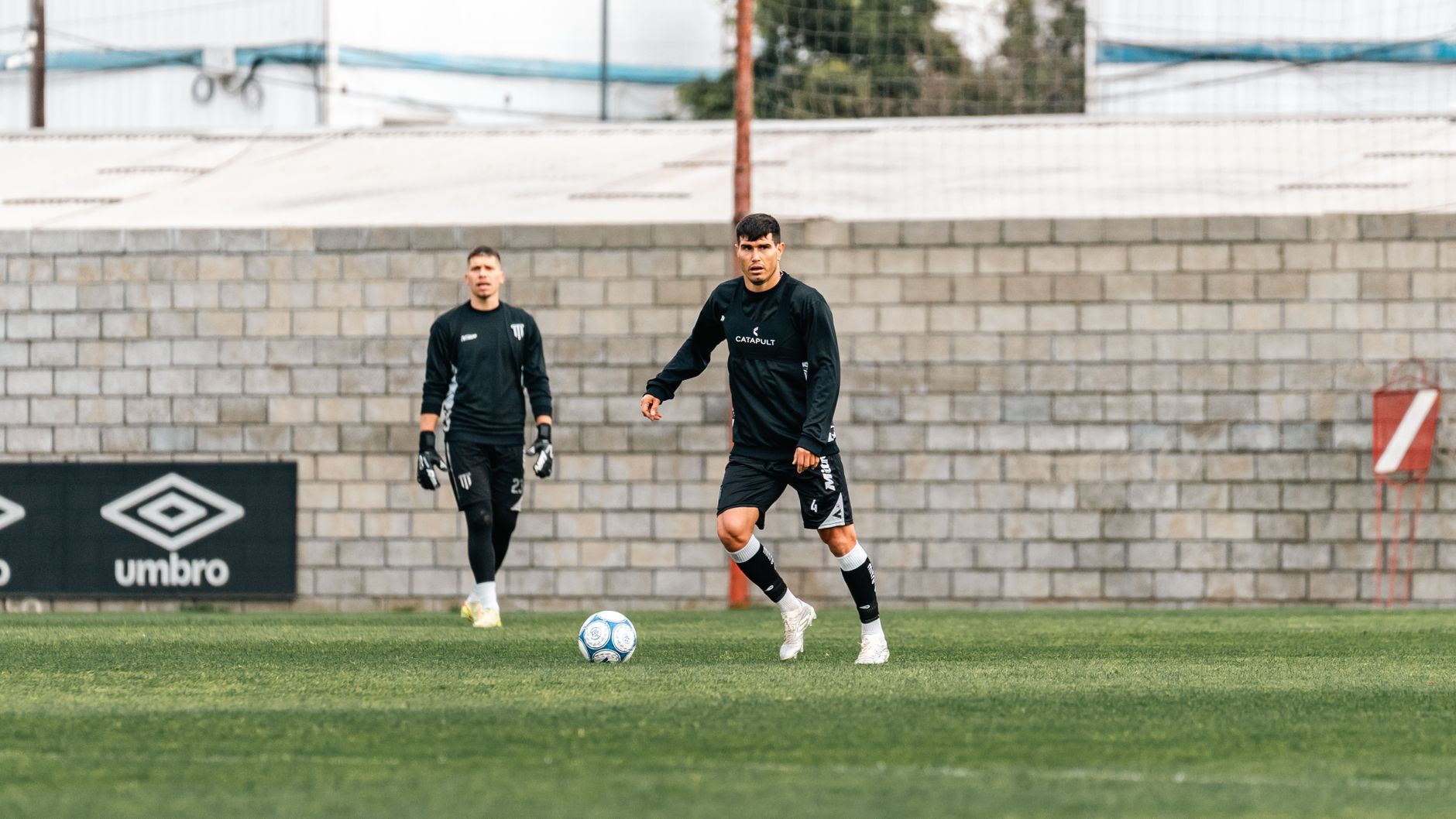
Photo by Franco Monsalvo on Pexels
Want a practical way to connect domestic form with World Cup expectations? Follow Stadium View for team tactics and player-stat updates.
If You Want Talent Pipelines and Competitive Underdogs: Explore Portugal, the Netherlands, and Belgium
Liga Portugal, the Eredivisie, and the Belgian Pro League are ideal for viewers who want to identify emerging talent before the biggest European brands arrive with enormous transfer fees. Portugal’s Benfica, Porto, Sporting CP, and Braga have long operated as important development and selling clubs. The Netherlands continues to produce technically educated players through Ajax, PSV Eindhoven, Feyenoord, and AZ Alkmaar, while Belgium’s Club Brugge, Anderlecht, Genk, and Union Saint-Gilloise contribute to a competitive domestic ecosystem.
The Belgian Pro League’s playoff structure is a genuine watchability factor. Its split format can change the emotional temperature of the season, but it also complicates comparisons with leagues using a conventional 38-match table. Liga Portugal offers a similar warning: the top three clubs draw enormous attention, yet the league’s player-development value can exceed its title-race unpredictability.
The Eredivisie is often the cleanest choice for studying attacking principles and young players receiving meaningful responsibility. Watch how full-backs position themselves in buildup, how midfielders receive between lines, and whether forwards press as a unit. These observations are more valuable than simply memorising which club sits first. For deeper scouting context, use our [Internal Link: young players to watch in 2026].
A simple talent-scouting checklist
- Track minutes, not only highlight clips.
- Compare a player’s role against the team’s tactical system.
- Check performance against strong opponents and European competition.
- Note whether decision-making improves across the season.
- Separate genuine development from a short burst of goals.

Photo by Franco Monsalvo on Pexels
The beautiful trap here is overconfidence. A teenager dominating in the Eredivisie may need a different role in Serie A, the Premier League, or MLS. Context is king, and the throne is guarded.
Common Pitfalls to Avoid
The most common mistake is ranking leagues with one metric, such as attendance, television reach, transfer spending, or UEFA coefficients. Each metric answers a different question: attendance measures stadium demand, broadcast reach measures distribution, coefficients reflect continental results, and transfer spending reflects economic capacity. None alone proves that every match is better. The International Federation of Football History and Statistics and UEFA provide useful comparative material, but responsible readers should still inspect methodology.
A second mistake is treating football predictions as certainty. Even an apparently superior team can be weakened by travel, rotation, weather, suspensions, or a goalkeeper’s single error. Gambling-related decisions require particular discipline: use legal services in your jurisdiction, set a firm budget, never chase losses, and remember that past league performance does not guarantee a future result. Stadium View provides football-focused information, not a promise of profit.
Avoid these traps:
- Confusing global fame with competitive balance.
- Comparing attendance totals from different reporting methods.
- Ignoring fixture congestion before making a match assessment.
- Treating transfer value as a direct measure of team quality.
- Assuming a 2026 World Cup host-market boost automatically improves MLS results.
- Copying a tip without checking lineups, injuries, and motivation.
One official principle is worth keeping close: FIFA’s competition materials describe the World Cup as “the greatest show on earth.” Passion is welcome. Recklessness is not. Our [Internal Link: responsible football analysis guide] can help you build a calmer process.
The 30-Day Check-In: How Should You Reassess Your Watchlist?
Reassess your 2026 football watchlist every 30 days by reviewing form, tactical changes, player availability, attendance trends, continental results, and the quality of opposition faced. A monthly review prevents early-season hype, famous-club bias, and one spectacular match from distorting your league choices. Keep the same criteria each time so your ranking remains comparable.
Use a simple four-week audit. In week one, record the table and recent results; in week two, review injuries, suspensions, and rotation; in week three, watch two full matches rather than highlights; in week four, compare tactical patterns and update your personal ranking. This process produces a more honest answer than endlessly refreshing social media reactions. Yes, it takes effort. So does avoiding a bad call, and I have learned that lesson the hard way.
The 30-day method also uncovers information that broad league rankings miss. For example, a club may climb the table while creating fewer high-quality chances, relying instead on unusually efficient finishing. Another team may have poor results but a stable pressing structure that improves once key defenders return. Those distinctions matter for fans, analysts, fantasy players, and anyone assessing match conditions around the 2026 FIFA World Cup.
Your monthly scorecard
- Entertainment: Were the matches genuinely compelling?
- Tactical interest: Did teams show identifiable, adaptable systems?
- Player development: Did emerging players receive meaningful minutes?
- Competitive balance: Were meaningful stakes spread across the table?
- World Cup relevance: Did the league provide useful national-team signals?
- Reliability: Were scheduling and lineup conditions easy to verify?
The best league to watch is not fixed forever. In January, you may want Premier League intensity; in April, Bundesliga atmosphere; in July, MLS and Liga MX relevance around the World Cup. Keep the list alive.
Final Verdict: Which Football Leagues Should You Watch in 2026?
The Premier League is the strongest overall recommendation, the Bundesliga is the best for atmosphere and attacking tempo, La Liga leads for technical quality, Serie A excels in tactical variety, and MLS is the most strategically interesting growth story ahead of the 2026 FIFA World Cup. Brasileirão Série A, Ligue 1, Liga MX, Liga Portugal, the Eredivisie, and the Belgian Pro League complete a compelling global schedule.
My personal advice is to build a three-league rotation rather than pledge loyalty to one ranking. Choose one heavyweight competition, one talent-development league, and one regional league connected to your World Cup interests. Check the data, watch complete matches, and reassess every 30 days. That combination gives you richer football and fewer embarrassing assumptions. Welcome to the operation; we are watching smarter now.
Explore Stadium View for daily match predictions, tactical breakdowns, player statistics, and 2026 World Cup coverage.
Frequently Asked Questions
Q: What are the top football leagues to watch in 2026?
A: The Premier League, Bundesliga, La Liga, Serie A, Ligue 1, Brasileirão Série A, MLS, Liga MX, Liga Portugal, and Eredivisie are the leading choices for 2026. The Premier League offers the broadest global reach, while the Bundesliga stands out for stadium attendance and supporter culture. MLS and Liga MX deserve extra attention because the 2026 FIFA World Cup is being hosted in the United States, Canada, and Mexico.
Q: How should I choose the best football league for my interests?
A: Choose a league according to the experience you want rather than relying on a single ranking. Select the Premier League for star power, Bundesliga for atmosphere, La Liga for technical play, Serie A for tactical detail, and the Eredivisie or Liga Portugal for emerging talent. Watch two complete matches, check current lineups, and reassess your choice after 30 days.
Q: What is the difference between the Premier League and Bundesliga?
A: The Premier League generally offers greater financial depth and global commercial reach, while the Bundesliga is especially recognised for attendance and supporter culture. Reported latest-season attendance was approximately 15.38 million for the Premier League and 11.83 million for the Bundesliga. The Premier League often provides broader squad depth; the Bundesliga frequently delivers more visibly aggressive pressing and transition football.
Q: Is MLS worth watching before the 2026 World Cup?
A: Yes, MLS is worth watching because its North American setting makes it directly relevant to the 2026 FIFA World Cup market. The league reportedly reached more than 180 countries and recorded roughly 7.74 million in latest-season attendance. Viewers should account for travel distance, artificial surfaces, weather, and scheduling before comparing MLS performance directly with European competitions.
Q: How much does it cost to follow the top football leagues in 2026?
A: The cost depends on your country, broadcaster, streaming platform, and number of competitions selected. A single domestic package is usually cheaper than combining Premier League, Bundesliga, La Liga, Serie A, and MLS access, so compare monthly plans before subscribing. Check blackout rules, mobile access, replay availability, and cancellation terms rather than choosing solely by headline price.
Q: What should I do if football league statistics conflict?
A: If statistics conflict, identify the season, definition, source, and collection method before using the figures. Attendance may mean total tickets, paid entries, or average match attendance, while broadcast reach may count territories rather than unique viewers. Compare UEFA, FIFA, league websites, and reputable media, then label figures as reported estimates when they are not directly audited.
Q: Can league rankings help with football betting decisions?
A: League rankings can provide context but cannot guarantee betting outcomes or profit. Form, injuries, confirmed lineups, rest days, travel, weather, motivation, and price value matter more than a league’s reputation alone. If you choose to gamble, use only legal services, set a fixed budget, avoid chasing losses, and treat Stadium View analysis as information rather than a promise.
End of transmission.
Stadium View • Neon Protocol • System Active