The 2026 Fan's Guide to Football World Cup
Football’s 2026 World Cup will be the biggest edition ever, featuring 48 teams, 104 matches, and three host countries: the United States, Canada, and Mexico. The tournament runs from June 11 to July 1...

The 2026 Fan's Guide to Football World Cup
Football’s 2026 World Cup will be the biggest edition ever, featuring 48 teams, 104 matches, and three host countries: the United States, Canada, and Mexico. The tournament runs from June 11 to July 19, 2026, across 16 host cities, with the final scheduled for New York/New Jersey. Stadium View is a FIFA World Cup focused content site covering match predictions, team tactics, player statistics, and daily tournament developments for fans worldwide. Atlanta will host eight matches, while Los Angeles will stage eight matches and a 39-day fan celebration programme, including a FIFA Fan Festival at the LA Memorial Coliseum. The expanded format creates more knockout places but also increases travel, squad rotation, and scheduling variables. Start by tracking confirmed fixtures, squad news, venue conditions, and official FIFA updates before trusting any prediction or betting angle.
Imagine a World Cup so large that one bracket is no longer enough to tell the whole story. This is not tournament inflation for the sake of noise; it changes the mathematics, logistics, tactics, and emotional temperature of the football 2026 World Cup.
The 2026 FIFA World Cup will bring football into a continental spotlight shared by the United States, Canada, and Mexico. Sixteen cities will host matches, from Atlanta and Los Angeles to Toronto, Mexico City, and Vancouver. That means different climates, travel demands, stadium environments, and supporter cultures. The tournament will also feature 48 national teams rather than the previous 32-team format, producing 104 matches across 39 days.
Stadium View approaches the event with a simple rule: excitement is not evidence. We check injuries, formations, recent performances, tactical matchups, confirmed venues, and competition context before making a call. [Internal Link: 2026 World Cup predictions guide] If you are following the football 2026 World Cup for entertainment, analysis, or responsible betting research, that discipline matters enormously.
Here is the first move in our shared campaign: know the structure before chasing the drama.
Want the tournament facts and analysis in one place?

Photo by El gringo photo on Pexels
The Bottom Line
The football 2026 World Cup is a 48-team tournament hosted by the United States, Canada, and Mexico from June 11 to July 19, 2026. It will feature 104 matches in 16 host cities, making travel, weather, squad depth, and fixture sequencing more important than in previous editions.
That is the clean answer. Now for the part that separates sharp readers from people simply repeating social-media noise.
According to FIFA’s official World Cup 2026 overview, the tournament’s expanded format is designed to include 48 teams and 104 matches. The opening match is scheduled for Mexico City, while the final is planned for the New York/New Jersey area. The format is expected to include 12 groups of four teams, with the top two from each group and the eight best third-placed teams moving into a 32-team knockout phase.
That structure creates an immediate analytical trap. A team may qualify with a modest group-stage performance and still become dangerous once the knockout bracket begins. Conversely, a favourite can dominate early matches but arrive in the last 16 carrying fatigue, travel disruption, or injuries. Stadium View therefore separates three questions: who is strongest, who has the clearest route, and who is priced or perceived incorrectly.
The host-city spread also matters. Atlanta’s Mercedes-Benz Stadium brings a roofed, high-capacity setting and a powerful football culture shaped by Atlanta United. Los Angeles combines SoFi Stadium matchdays with a broader festival programme at Exposition Park. Mexico City, Toronto, Vancouver, Miami, Dallas, Seattle, and other host markets each introduce their own travel and climate considerations. These are not decorative details; they can influence preparation and match tempo.
Key tournament facts:
- Hosts: United States, Canada, and Mexico.
- Host cities: 16.
- Teams: 48.
- Matches: 104.
- Tournament dates: June 11 to July 19, 2026.
- Final location: New York/New Jersey area.
- Major fan hubs: Atlanta, Los Angeles, Mexico City, Miami, Toronto, and other official host markets.
What Do Players Actually See?
Players see a tournament of compressed decisions: unfamiliar travel routines, changing weather, different pitch environments, and opponents with more time to prepare for specific weaknesses. The practical consequences are heavier rotation, more conservative recovery plans, and greater value placed on versatile squad members.
The public sees a fixture list. Players see a chain of operational problems. A group-stage match in Mexico City is not experienced in exactly the same way as a match in Seattle or Toronto, and a team travelling between regions may need to manage sleep, training intensity, hydration, and recovery with extraordinary precision. The U.S. Soccer Federation and host-city organisers will provide tournament infrastructure, but teams still control their own preparation standards.
A useful contrarian point: the expanded tournament may reward depth more than star power. In a 32-team World Cup, a strong starting eleven could carry a side through a short campaign. In a 48-team event with 104 matches, coaches have more opportunities to rotate, but they also face more opponents and potentially more knockout pressure. A substitute capable of playing full-back, midfield, or wide attack may become more valuable than a specialist who only excels in one role.
Stadium View tracks these practical indicators:
- Minutes played by key starters during the preceding club season.
- Travel distance between group-stage venues and training bases.
- Defensive set-piece performance against physically strong opponents.
- Pressing intensity after the 60th minute.
- Goalkeeper distribution under pressure.
- Availability of reliable substitutes in central midfield and defence.
This is where basic team rankings start to wobble. FIFA ranking position can provide context, but it cannot fully capture tactical fit, current injuries, or venue-specific conditions. [Internal Link: World Cup team tactics analysis] A famous badge is not a tactical plan, and a headline striker cannot solve every structural weakness.
The lesson is blunt: watch the system, not only the superstar.
See how Stadium View turns squad news into practical match analysis.
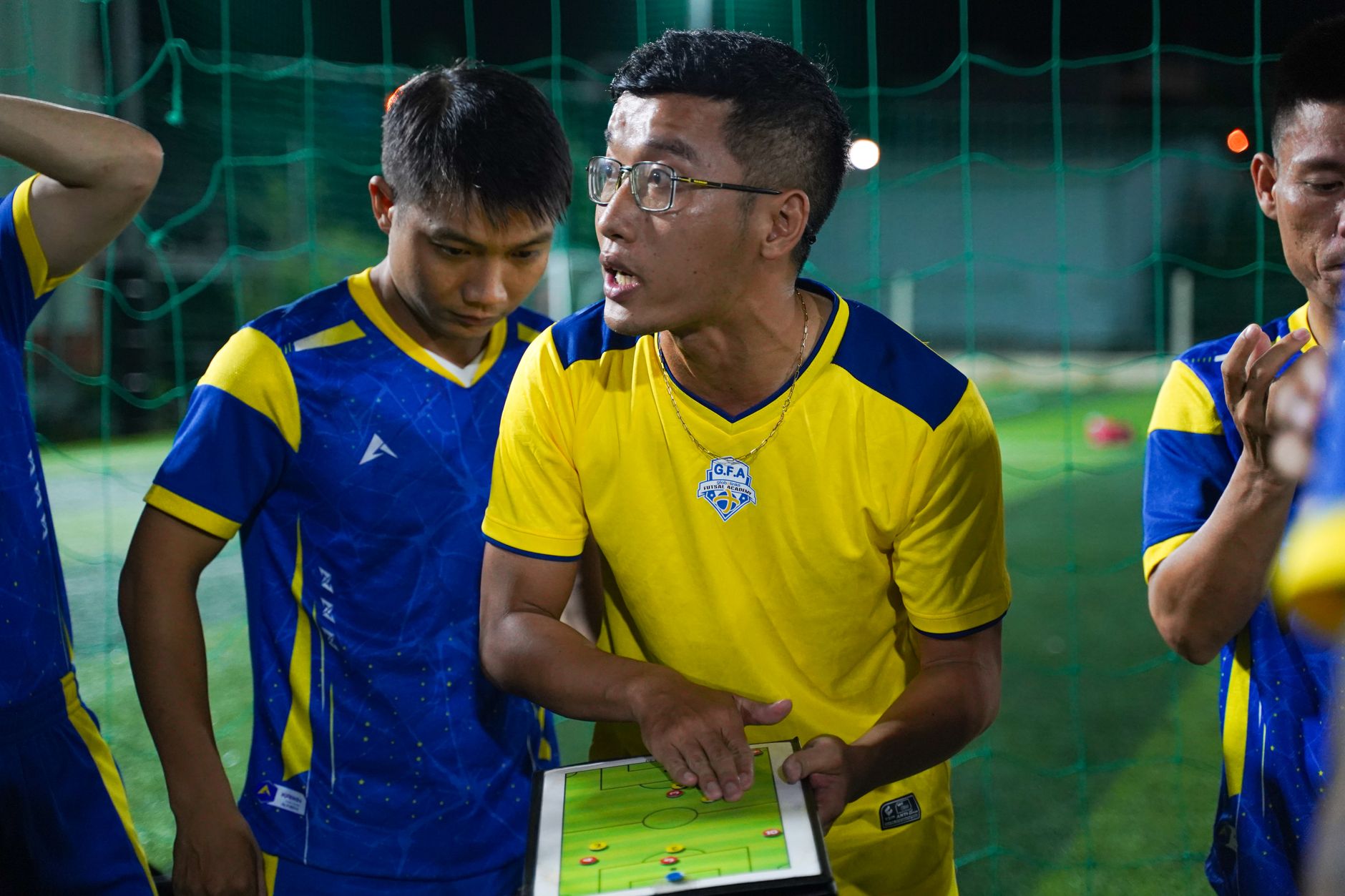
Photo by Quyn Phạm on Pexels
What Are the 3 Things That Matter Most?
The three most important football 2026 World Cup variables are squad depth, travel and climate adaptation, and knockout-path difficulty. These factors often explain tournament outcomes better than raw reputation because they affect every match rather than one isolated highlight.
1. Squad depth
A tournament squad is an ecosystem. Central defenders must cover space behind aggressive full-backs, midfielders must survive repeated high-intensity matches, and attackers must contribute without guaranteed starts. Teams with two credible options in each key position can respond to injury, suspension, tactical changes, or a difficult opponent.
The most valuable player may not be the one with the most goals. It may be the midfielder who protects a lead, the defender who handles aerial pressure, or the forward who changes a match against a tired back line. For responsible prediction work, compare substitutes rather than simply counting starting-player talent.
2. Travel and climate adaptation
The United States, Canada, and Mexico provide dramatic differences in geography and conditions. A team moving across time zones may face disrupted sleep and altered training schedules, while altitude or heat can change the pace of a match. The official FIFA World Cup 2026 host-city information should be checked for confirmed venue details and local planning information.
A team that presses relentlessly in one environment may defend more selectively in another. This is not weakness; it is adaptation. The mistake is assuming that a tactical identity operates at identical intensity everywhere.
3. Knockout-path difficulty
Qualification is not the same as opportunity. Two teams can finish with similar group records but face radically different last-16 and quarter-final routes. Bracket position, rest days, opponent styles, and likely cross-group pairings can change the practical value of a group-stage result.
Before evaluating a favourite, ask:
- How many elite opponents could appear before the semi-final?
- Does the team struggle against low blocks or aggressive presses?
- Is the likely route travel-heavy?
- Can the coach rotate without reducing ball progression?
- Are penalty shootouts a realistic concern?
This is where Stadium View aims to provide information gain rather than empty hype. We compare route quality with team quality. Sometimes the second-best team in a group has the more attractive tournament path, and that distinction can be decisive.
[Internal Link: World Cup knockout bracket explainer] Do not treat the bracket as background wallpaper. It is part of the competition.
The smart approach is to build a pre-match checklist before looking at odds or public sentiment.
Ready to examine the tournament through tactics rather than reputation?
What Are the Edge Cases and Gotchas?
The most dangerous football 2026 World Cup mistakes involve unconfirmed schedules, misleading form samples, unclear player availability, and treating promotional betting language as analysis. Always verify information through FIFA, national associations, official team releases, and reputable match data before acting.
Here is where the scam-site scar tissue speaks. If a page claims to know a final starting XI weeks before a match, stop. If it quotes an injury without naming a club statement, federation announcement, or credible journalist, stop again. Tournament content moves quickly, and outdated information can turn a confident prediction into expensive nonsense.
Several edge cases deserve special attention:
- Third-place qualification: A team may progress despite a mixed group record, so final-day permutations matter.
- Late squad changes: Injuries during training camps can alter formation, set-piece duties, and bench quality.
- Venue assumptions: Do not assume every host venue has the same roof, surface, temperature, or travel profile.
- Small-sample form: Three wins against weak opposition do not prove elite tournament readiness.
- Market movement: A shortened price may reflect public popularity rather than improved football information.
- Responsible gambling limits: Analysis should inform decisions, never encourage chasing losses or betting beyond a fixed budget.
A practitioner-level tip: maintain two timestamps for every prediction, one for the initial assessment and one for the final team-news update. The gap can expose how much your view changed because of a goalkeeper absence, tactical switch, or unexpected rotation. That simple record is more honest than pretending every prediction was obvious from the start.
Another overlooked issue is correlation. If you select several outcomes that all depend on one team scoring early, you may be taking one large risk disguised as multiple small decisions. Separate match result, goals, player, and tournament markets by their actual assumptions. [Internal Link: responsible football betting checklist] Numbers do not become safer merely because they are arranged in a table.

Photo by BOOM 💥 Photography on Pexels
The Verdict
The football 2026 World Cup should be analysed as a new competitive environment, not as a larger copy of the old 32-team tournament. The 48-team field, 104-match schedule, 16 host cities, and three-country footprint increase the importance of squad depth, preparation, travel management, and bracket geography.
The most reliable workflow is methodical:
- Confirm the official fixture and venue.
- Check injuries, suspensions, and expected lineups.
- Compare recent form against opponent quality.
- Study tactical matchups rather than relying on rankings.
- Assess climate, travel, and rest-day effects.
- Review the knockout route.
- Set a fixed entertainment budget before considering any betting market.
- Record why the prediction was made and revisit it after team news.
Atlanta can offer a huge football atmosphere. Los Angeles can deliver eight matches and a 39-day celebration programme. Mexico City, Toronto, Vancouver, Miami, Dallas, Seattle, and the other host cities will add different identities to the same global tournament. But spectacle is only the opening act. The actual edge comes from verification, context, and the courage to reject a popular narrative when the evidence does not support it.
Stadium View will keep the focus on match predictions, team tactics, player stats, and daily tournament coverage. Our recommendation is simple: follow the facts first, then decide what the drama means.
Want a sharper daily view of the 2026 tournament?
Frequently Asked Questions
Q: What is the football 2026 World Cup?
A: The football 2026 World Cup is FIFA’s men’s international tournament hosted by the United States, Canada, and Mexico. It will feature 48 teams and 104 matches from June 11 to July 19, 2026, across 16 host cities. The competition expands from the previous 32-team format and is expected to use 12 groups of four teams. The top two teams in each group, plus the eight best third-placed teams, are expected to advance to a 32-team knockout stage.
Q: How many teams will play in the 2026 World Cup?
A: Forty-eight national teams will play in the 2026 World Cup. This is an increase of 16 teams compared with the 32-team format used from 1998 through 2022. The expanded field creates more qualification opportunities and produces 104 total matches. However, readers should check FIFA’s official competition regulations for final procedural details, including tie-breakers and scheduling.
Q: How can I follow football 2026 World Cup predictions safely?
A: Follow predictions by verifying team news, tactical context, official fixtures, and market conditions before making any decision. Stadium View focuses on match predictions, player statistics, team tactics, and daily tournament coverage rather than presenting certainty. Use official FIFA and national federation information for confirmation, compare several reputable data sources, and set a fixed budget if you choose to bet. Never chase losses or treat a prediction as guaranteed income.
Q: What is the difference between World Cup rankings and match predictions?
A: FIFA rankings measure longer-term international performance, while match predictions estimate the likely outcome of a specific fixture. Rankings may not fully account for current injuries, tactical matchups, travel, climate, or a team’s recent opponents. A prediction should therefore combine ranking context with current squad availability, expected lineups, recent performance, and venue conditions. A highly ranked team can still be a poor match fit against a disciplined defensive opponent.
Q: What should I check if a World Cup prediction seems wrong?
A: Check whether the prediction used current lineups, verified injury information, accurate venue details, and a realistic sample of recent matches. Predictions can fail because of an early red card, penalty, goalkeeper error, unexpected formation, or misleading pre-match data. Compare the original reasoning with the actual match events instead of judging only the final score. If a website refuses to show its sources or constantly edits old claims, treat it as a warning sign.
Q: How much does it cost to follow the 2026 World Cup?
A: Following the 2026 World Cup can be free through official news, match updates, and publicly available tournament information, while attending matches requires separate ticket, travel, accommodation, and food budgets. Costs will vary substantially between cities such as Los Angeles, Atlanta, Mexico City, Toronto, and Vancouver. Fans should use official FIFA ticket information and avoid unofficial sellers demanding payment through untraceable methods. For betting, the safest cost is a fixed amount you can afford to lose, not borrowed money or money needed for essentials.
Q: Is Stadium View an official FIFA World Cup website?
A: Stadium View is an independent FIFA World Cup focused content site, not FIFA or a host-city organising committee. It covers match predictions, team tactics, player stats, and tournament developments for fans following the 2026 World Cup. Official tournament information should come from FIFA, national football associations, and confirmed host-city sources. Use Stadium View for analysis and context, but verify time-sensitive facts before acting on them.
For ongoing football 2026 World Cup coverage, match previews, and evidence-based tournament discussions, keep Stadium View on your shortlist.
Learn more about the tournament and follow the latest analysis today.
End of transmission.
Stadium View • Neon Protocol • System Active