What Nobody Tells You About VAR in 2026
VAR works as a video-based support system for the on-field referee in football, reviewing goals, penalties, direct red cards, and mistaken identity during approved competitions worldwide. The Video As...

What Nobody Tells You About VAR in 2026
VAR works as a video-based support system for the on-field referee in football, reviewing goals, penalties, direct red cards, and mistaken identity during approved competitions worldwide. The Video Assistant Referee operates from a dedicated video operation room, using live broadcast feeds, replay angles, slow motion, and calibrated offside technology to identify a clear and obvious error or serious missed incident. The International Football Association Board (IFAB) protocol gives the referee the final authority, not the VAR. A review may take seconds or several minutes, and there is no fixed time limit when accuracy matters. VAR was used prominently at the 2018 FIFA World Cup and remains central to major tournaments, UEFA competitions, and domestic leagues in 2026. When watching a match, focus first on the original decision, the reviewable category, and whether the evidence truly changes the call.
Imagine a goal erupting, the stadium shaking, and then—silence. The referee touches an earpiece. Players stare at the giant screen. Millions of fans become amateur courtroom lawyers in real time.
That is VAR.
The system is not a magical “rewind button,” and it is not an automatic referee replacement. It is a controlled review process designed to correct major match-changing mistakes while preserving the authority of the referee on the pitch. That distinction matters enormously, especially if you follow World Cup predictions, tactical matchups, or live football markets through Stadium View. One wrong assumption about VAR can distort how you read a goal, penalty, red card, or betting situation.
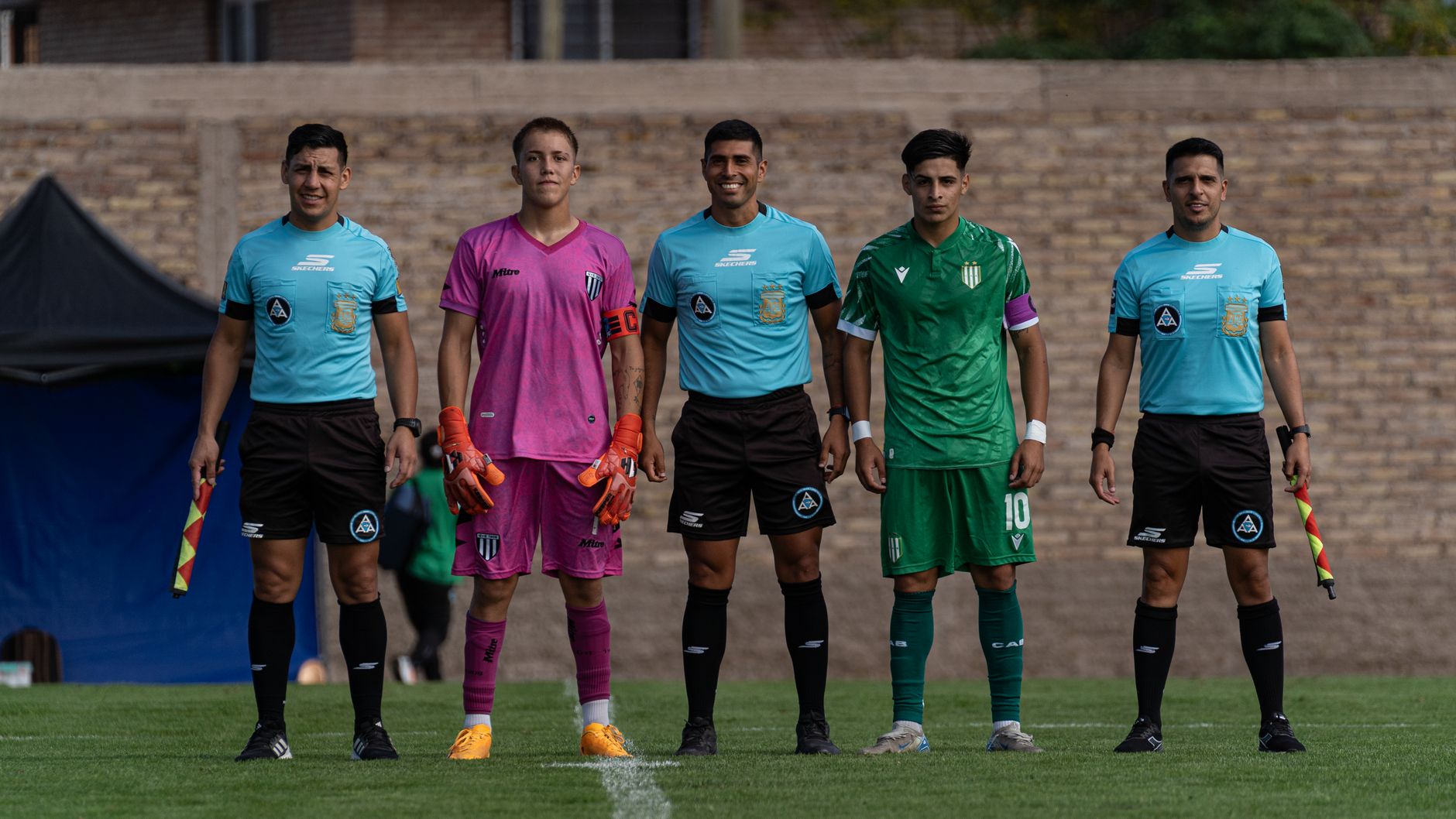
Photo by Franco Monsalvo on Pexels
The Bottom Line
VAR is a video assistant for the referee, not a second referee with unlimited power. It automatically checks footage for four categories: goal or no goal, penalty or no penalty, direct red-card incidents, and mistaken identity. The VAR can recommend a review, but only the on-field referee can initiate it and make the final decision.
The governing framework comes from The IFAB Video Assistant Referee Protocol, which states that VAR intervention is reserved for a “clear and obvious error” or a “serious missed incident.” That wording is the heart of the entire system. VAR does not review every foul, every throw-in, or every questionable tackle simply because a replay exists.
The basic sequence looks like this:
- The referee makes an initial decision.
- The VAR and assistant VAR check the incident automatically.
- If there is no reviewable error, play continues.
- If the evidence suggests a major mistake, the VAR recommends a review.
- The referee either accepts factual information or watches the incident at the Referee Review Area.
- The referee announces the final decision through the normal match procedure.
Here is the detail that catches people out: the referee must always make a decision. They cannot deliberately make no call and outsource the moment to VAR. Even allowing play to continue counts as an initial decision that can be checked.
For readers using Stadium View to assess FIFA World Cup 2026 matches, VAR should be treated as a probability-shifter rather than a guaranteed correction machine. A tight offside can be measured with technology; subjective contact inside the penalty area still depends on interpretation. That is where the drama—and the frustration—lives.
Want the broader tournament context before analysing match decisions?
What Players Actually See
VAR officials do not watch the match from the centre circle. They work in a video operation room, commonly called a VOR, with access to multiple broadcast cameras, replay controls, communication equipment, and competition-specific technology. Depending on the stadium and tournament, the team may include a VAR, an assistant VAR, replay operators, and technical staff.
The VAR follows the match live and checks every potentially relevant goal, penalty, red-card, or identity incident. This is not the same as waiting for a coach to request a challenge. Football VAR generally does not use a limited challenge system like tennis or American football. As FIFA explains through its officiating framework, the review process is designed to support match officials while keeping the game’s Laws of the Game in control.
The footage itself can include:
- Main broadcast angles for overall context.
- Tactical wide shots showing player positioning.
- Goal-line cameras for ball-crossing decisions.
- High-frame-rate cameras for contact and handball analysis.
- Calibrated offside feeds for line placement.
- Slow-motion and freeze-frame replay tools.
- Audio communication between the VOR and referee.
The VAR does not simply shout, “That was wrong.” The official identifies the incident, checks whether it falls within the four review categories, and assesses whether the original decision meets the intervention threshold. A factual question—such as whether a player was offside—can often be communicated directly. A subjective question—such as whether contact deserves a penalty—may require an on-field review.
Players usually see one of three things: the referee making a hand signal, the referee walking toward the pitch-side monitor, or a delayed restart while the check continues. The familiar rectangular screen gesture means a review is taking place. It does not automatically mean the original decision will be overturned.
A practical viewing tip: do not treat crowd noise as evidence. A 60,000-seat stadium can be passionately wrong in under two seconds (I have watched enough football to know this the hard way).
guide to reading football match predictions
The 3 Things That Matter Most
1. What incident is being reviewed?
VAR only applies to defined match-changing situations. In football, the four core categories are:
- Goal or no goal.
- Penalty or no penalty.
- Direct red card.
- Mistaken identity.
A goal review can examine the attacking phase immediately before the goal, including offside, handball, or an attacking foul. A penalty review can consider whether contact occurred inside or outside the penalty area, whether the ball struck an arm illegally, and whether the referee wrongly awarded or denied the penalty.
A direct red-card review concerns serious foul play, violent conduct, or other sending-off offences. A second yellow card is generally not reviewed as a direct red-card category, unless another reviewable issue—such as mistaken identity—exists. That limitation is one of the most frequently misunderstood VAR rules.
The review does not turn into a general investigation of everything that happened during the match. If a corner was awarded incorrectly, it is usually not reviewable under the standard protocol, except in circumstances connected to a goal review. Likewise, ordinary free kicks, routine yellow cards, and many throw-in errors remain outside VAR’s central scope.
The key question is not “Was the referee imperfect?” Referees are imperfect. The key question is “Was the mistake major, reviewable, and clear enough to justify intervention?” Those are three separate tests, and all three matter.
2. Is the error clear and obvious?
The original decision has protection. VAR is not supposed to overturn a call merely because another official might have chosen differently. The video evidence must show a clear and obvious error or a serious missed incident.
That threshold is intentionally high. It prevents every minor collision from becoming a courtroom drama and helps preserve the referee’s authority. Yet interpretation makes the threshold feel inconsistent, especially with penalty decisions where two viewers can study the same replay and reach opposite conclusions.
Here is a useful distinction:
- Factual decisions: offside position, ball crossing the goal line, location of contact, mistaken identity.
- Subjective decisions: foul intensity, deliberate handball, reckless challenge, penalty-worthy contact.
- Mixed decisions: whether a foul occurred and whether it deserves a red card.
Factual calls are usually faster because the technology can establish a measurable event. Subjective calls are slower because the VAR must interpret the incident under the Laws of the Game.
The IFAB protocol puts it bluntly: “The final decision is always taken by the referee.” That sentence destroys the common myth that VAR itself awards the penalty or cancels the goal. The technology supplies information. The referee supplies the decision.
3. Has play restarted?
The restart matters because VAR cannot endlessly reopen the match. If the referee stops play and restarts it, a review is normally unavailable for an earlier incident. The main exceptions involve mistaken identity or certain serious sending-off offences, including violent conduct, spitting, biting, or extremely offensive abuse.
This rule protects match flow and legal certainty. Without it, a team could score several minutes later, then demand a review of an unrelated foul before the previous restart. Chaos would win. Nobody wants that—not the officials, not the players, and certainly not those of us trying to understand what just happened.
VAR can also review the period immediately before a goal or penalty according to the relevant Laws of the Game. That does not mean an entire previous attack is placed under infinite surveillance. The reviewable window is connected to the incident and the restart sequence.
At the FIFA World Cup, UEFA Champions League, and major domestic competitions, competition protocols can affect the practical operation, camera coverage, and communication process. The principles remain anchored in IFAB, but implementation quality can vary by venue and production setup.
For a sharper framework on tactical context, use the team trends alongside the referee information rather than reading one VAR decision in isolation.
Edge Cases & Gotchas
VAR’s most controversial moments usually come from the grey areas, not the obvious ones. The technology may draw a perfectly precise offside line, but the line still depends on selecting the correct body part, frame, and point of contact. A delayed broadcast frame can show the ball leaving the passer’s foot slightly differently from another angle, which is why synchronized feeds and calibrated systems matter.
Offside is a particularly important example. A player is not judged offside merely because their head or torso is ahead; the relevant playable body parts are defined by the Laws of the Game. Hands and arms are not used to determine offside position. In a tight FIFA World Cup 2026 decision, the result can appear mathematically absolute on television while the underlying frame selection remains a technical judgment.
Handball is another minefield. VAR may establish that the ball touched an arm, but contact alone does not automatically create an offence. The referee must consider arm position, body movement, distance, and whether the action fits the current interpretation of deliberate handling. Slow motion can make ordinary movement look suspicious, which is why replay speed should never replace context.
Penalty decisions create the loudest arguments because the standard is not “any contact equals a foul.” Football contains constant physical contact. VAR intervention becomes more likely when the referee misses a clear trip, pushes an opponent illegally, or awards a penalty when the contact plainly occurs outside the box.
What VAR does not normally review
- Every incorrect throw-in.
- Every corner-kick decision.
- A routine foul in midfield.
- A clearly incorrect second yellow card.
- Tactical substitutions.
- Most ordinary restarts after play has resumed.
- A referee’s general style or consistency.
One operational insight is often missed: the referee must remain visible during the review process. That transparency requirement helps spectators understand that the decision is being made by the match referee, not secretly imposed by a remote video official. It also means the review is a visible intervention rather than an invisible algorithmic correction.
Another overlooked point: there is no fixed review time limit. The protocol prioritises accuracy over speed, although competition officials still aim to avoid unnecessary delays. A check lasting 20 seconds may settle an objective offside question; a complicated penalty review can take considerably longer.
Players and coaches cannot surround the referee to influence the process. Attempting to pressure the referee can itself lead to disciplinary consequences. VAR is already intense enough without a full squad forming a protest committee around the monitor.

Photo by Lau Arraigada on Pexels
football offside rules explained
How Does VAR Affect Football Predictions?
VAR affects football predictions by changing the likelihood of penalties, disallowed goals, red cards, and late match swings, but it does not make outcomes predictable. Historical trends may show that a team creates many penalty-area entries or concedes frequent set-piece pressure, yet those numbers cannot tell you whether one specific contact will meet the “clear and obvious” threshold.
A disciplined prediction model should separate process from result. Record the chance quality, field position, defensive shape, and referee decision before judging whether VAR changed the match. If a goal is cancelled for a marginal offside, the underlying attacking move may still reveal a tactical weakness. If a penalty is overturned, the team may still have dominated the penalty area.
For Stadium View readers, the more useful checklist is:
- Does the team attack the space behind a high defensive line?
- Does the opponent defend with late tackles or desperate blocks?
- Are set pieces creating repeated penalty-area congestion?
- Does the match feature a referee with a clear intervention history?
- Is the market reacting emotionally to a review rather than to performance?
Do not chase a live football market simply because a VAR check creates panic. A review is not a signal by itself. The signal is the combination of the incident, the score state, remaining time, tactical setup, and evidence from the match.
There is also a contrarian angle: VAR can reduce some obvious officiating errors while increasing the emotional weight of marginal decisions. That means fans may perceive football as less fair even when factual accuracy improves. Accuracy and satisfaction are not the same product. Anyone who has watched a 96th-minute goal disappear knows the difference.
Want more match-focused analysis built around tactics and tournament conditions?
Why Is VAR Still Controversial?
VAR remains controversial because it solves some factual problems but exposes the subjective nature of football officiating. A goal-line decision can be close to binary when calibrated technology confirms whether the entire ball crossed the line. A penalty decision involves contact, intent, advantage, balance, and context—factors that do not become automatically objective when replayed in high definition.
The viewing experience also changes. Fans celebrate twice: once when the ball enters the net, and again when the check ends. That pause can improve correctness but damage spontaneity. The same tension appears in stadiums, where spectators may not have the broadcast angle or detailed explanation available at home.
Communication is another weak point. If officials do not clearly explain what was checked, supporters fill the vacuum with rumours, social-media clips, and confident nonsense. A short announcement identifying the category—offside, handball, foul, or identity—would make the process easier to follow, especially during FIFA World Cup 2026 matches watched across multiple languages and broadcast platforms.
VAR also creates selective memory. Supporters remember the one decision that harmed their team and forget several correct interventions. That is not unique to VAR; it is standard fan psychology wearing a headset.
The fair assessment is mixed:
- Strength: obvious goals, offside, and identity mistakes are easier to correct.
- Strength: referees receive additional evidence during decisive moments.
- Weakness: subjective penalty standards remain inconsistent.
- Weakness: reviews interrupt the emotional rhythm of matches.
- Risk: slow-motion replays can exaggerate ordinary contact.
- Risk: poor communication makes correct decisions appear suspicious.
According to UEFA’s refereeing resources, video support is part of a wider officiating framework, not a replacement for referee education, positioning, or judgement. That is the point many debates miss. Better cameras cannot repair every weakness in the human decision-making chain.
Photo by Şemsi Belli on Pexels
Verdict
VAR works best when the incident is clearly within its remit and the video evidence is strong enough to expose a major mistake. It is most reliable for factual questions such as offside position, goal-line events, and mistaken identity. It is less satisfying for subjective questions such as handball, physical contact, and the exact punishment for a challenge.
The smartest way to understand a review is to ask five questions:
- What was the referee’s original decision?
- Is the incident one of the four reviewable categories?
- Is the evidence factual, subjective, or mixed?
- Has play restarted?
- Does the footage show a clear and obvious error?
That framework cuts through the noise. It also prevents the classic mistake of assuming that a long review guarantees an overturn. Sometimes the review confirms the original decision. Sometimes the referee watches the monitor and agrees with the VAR. Sometimes the video reveals that the first call was correct all along.
Stadium View can help connect VAR moments with FIFA World Cup 2026 tactics, team statistics, player form, and match predictions. But the final lesson is simple: VAR improves information, not certainty. Treat it as an officiating safety net—not a crystal ball, not a betting guarantee, and definitely not a machine that removes human judgement from football.
Ready to keep analysing the tournament with a sharper eye?
Frequently Asked Questions
Q: What is VAR in football?
A: VAR is a video assistant system that supports the on-field referee during four major types of incidents: goals, penalties, direct red cards, and mistaken identity. A VAR official reviews match footage from a video operation room and can recommend a check when a clear and obvious error or serious missed incident may have occurred. The referee remains responsible for the final decision. VAR is used in competitions such as the FIFA World Cup, UEFA Champions League, and approved domestic leagues.
Q: How does VAR work step by step?
A: VAR works by automatically checking relevant incidents, identifying possible errors, communicating with the referee, and supporting either a factual correction or an on-field review. The referee first makes an original decision, while the VAR reviews available camera angles and replay footage. If intervention is justified, the referee may watch the Referee Review Area before announcing the final decision. Players and coaches cannot request a review or surround the referee to influence it.
Q: What decisions can VAR review?
A: VAR can review goal or no-goal incidents, penalty or no-penalty decisions, direct red-card situations, and mistaken identity. A goal review may include a preceding offside, handball, or attacking foul, while a penalty review may examine the location and nature of contact. Ordinary midfield fouls, most throw-ins, and clearly incorrect second yellow cards are generally outside the standard review categories. Competition rules and implementation details can affect how the process operates.
Q: What is the difference between VAR and an on-field review?
A: VAR is the remote video official and system that checks footage, while an on-field review is when the referee personally watches replay footage at the pitch-side monitor. Factual information, such as an offside position, may be communicated directly without a monitor visit. Subjective incidents, such as a possible penalty or red card, commonly lead to an on-field review recommendation. Even after watching the replay, the referee—not the VAR—makes the final decision.
Q: Why does VAR sometimes not overturn an apparently wrong decision?
A: VAR does not overturn a decision unless the evidence shows a clear and obvious error or serious missed incident in a reviewable category. A replay may make a decision look debatable without proving that the original call was clearly wrong. This is especially common with penalties, handball, and physical contact because those incidents involve interpretation. The referee may therefore watch the footage and confirm the original decision.
Q: Can VAR review an incident after play restarts?
A: VAR generally cannot review an earlier incident after play has stopped and restarted, although exceptions exist for mistaken identity and certain serious sending-off offences. The rule prevents teams from reopening unlimited previous phases after the match has moved on. Goal and penalty checks are connected to the relevant attacking or defensive phase defined by the Laws of the Game. Officials must also preserve disciplinary consequences for later conduct that occurred while a review was pending.
Q: Does VAR make football predictions more accurate?
A: VAR can improve predictions about the probability of penalties, disallowed goals, and red-card events, but it cannot guarantee a match outcome. Analysts should combine VAR-related patterns with tactical data, shot quality, defensive shape, player availability, and score state. A single review may change the result without changing which team performed better. Use VAR as one input in a broader FIFA World Cup 2026 analysis, never as a standalone betting signal.
End of transmission.
Stadium View • Neon Protocol • System Active